
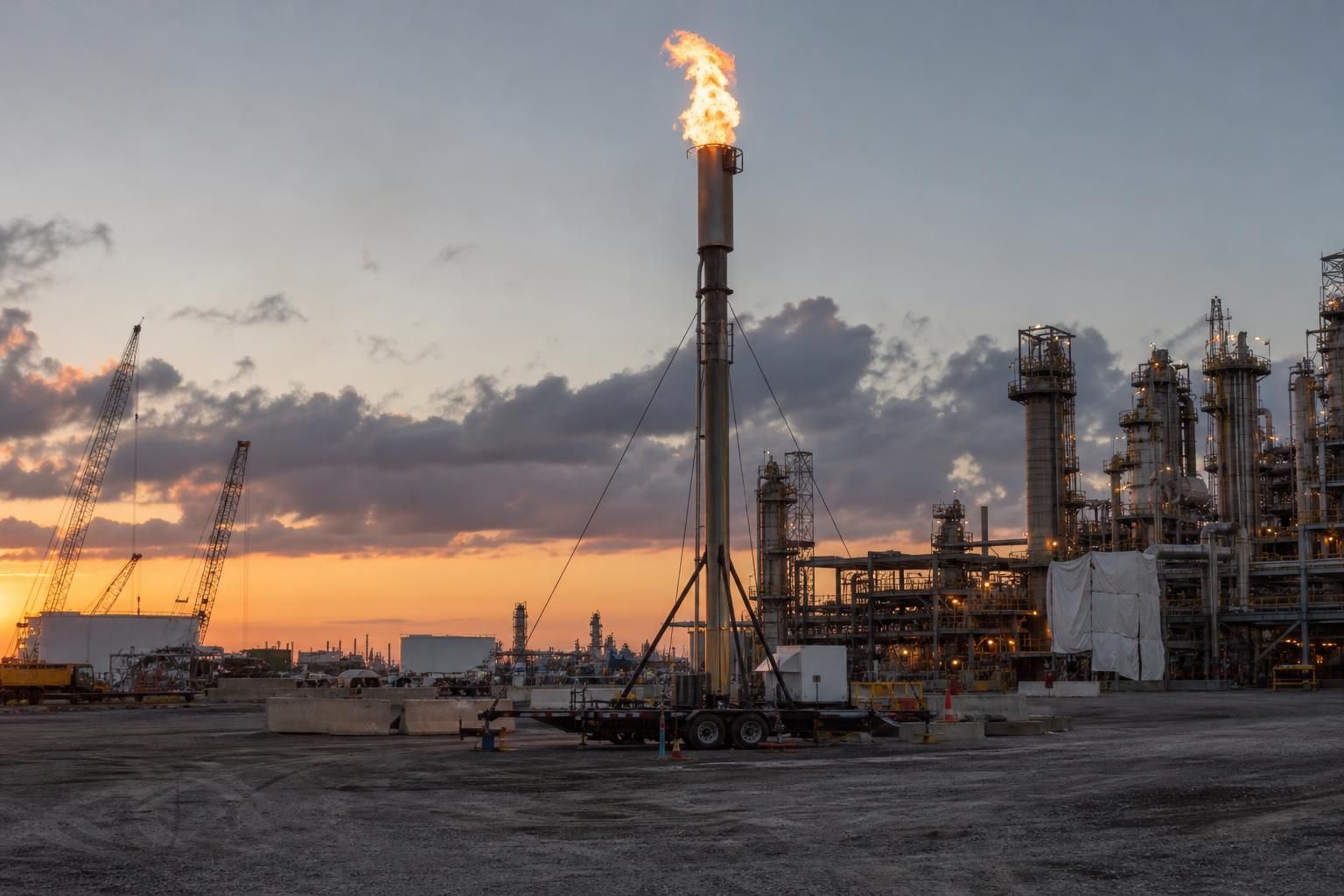
A plant turnaround compresses months of planning into a few tight weeks. Permanent flare systems may be isolated for inspection or tie-ins, process units are depressured and purged, and gas still has to go somewhere safe. That is where temporary flaring enters the plan. For many facilities, a rental unit is the practical way to keep relief and purge flows handled without extending the shutdown. In 2026, with schedules and compliance expectations both tight, getting this decision right early saves real pressure later.
Why turnarounds create temporary flaring needs
During normal operation, a plant's permanent flare handles upsets and planned releases. During a turnaround, parts of that system may be out of service. Maintenance crews may be working on the flare header, the stack or the tip. Some units may be brought down in stages, producing purge gas and hydrocarbon releases at times that do not match the plant's usual patterns. A temporary flare gives the site a safe, controlled destination for those flows while permanent equipment is being worked on.
Is a rental flare the right answer?
A rental flare is worth considering when the need is short-term, the schedule is fixed and buying equipment would sit idle afterward. It also makes sense when the required capacity differs from what you would ever install permanently. Ownership may still be better for sites that need the same capability year after year. The question is not which option is cheaper in the abstract, but which fits the duration, duty and risk profile of your project.
Questions to settle before you request a quote
- What gases will be sent to the flare, and at what flow rates and pressures?
- How long will the unit be needed, and is the schedule firm or likely to shift?
- What is the available footprint, and how close are people, structures and other equipment?
- What utilities are available at the chosen location, including fuel for pilots and any required power?
- Which air permits, notifications or approvals apply to temporary flaring at your site?
- Who will operate and monitor the flare, and what training do they need?
The more complete your answers, the more accurate the supplier's recommendation will be. Rushed information leads to oversizing, undersizing or surprises at mobilization.
Site readiness is half the battle
Even the right equipment can cause delays if the site is not ready. Plan the location, ground conditions and access route for delivery. Confirm that hookups to piping are specified and that required isolations, blinds and tie-in points are scheduled by the turnaround team. Consider radiant heat and the distance to personnel and structures, and make sure the safety department has reviewed the layout. These tasks sound small, but they often decide whether the unit is operating on day one or waiting on paperwork.
Choose a supplier who understands turnaround pressure
Turnarounds reward partners who think like project teams. A reliable plant turnaround supplier will talk through sequencing, delivery dates and what happens if the shutdown scope changes. Ask how quickly they can respond to field issues, what documentation they provide, and how they handle demobilization. A supplier who has supported shutdowns before will already know the common friction points and can flag them early.
Plan for the unexpected
Schedules move. Scope grows. A unit that was supposed to be isolated in week one may not be ready until week two. Build flexibility into the rental terms and the logistics so the equipment can stay longer or be repositioned if needed. Also decide in advance who has authority to approve changes, so that a field decision does not wait for a meeting.
A simple planning timeline
- Define flaring scenarios and flows as soon as the turnaround scope is drafted.
- Confirm regulatory and permit requirements with your environmental team.
- Request supplier recommendations and review sizing assumptions.
- Prepare the site, including location, access and tie-in points.
- Schedule delivery, setup and commissioning ahead of the first release.
- Assign operating responsibility and monitoring during the shutdown.
- Plan demobilization once releases are complete.
Frequently asked questions
How early should we start planning for a temporary flare? As early as the turnaround scope is known. Early planning leaves time for permits, sizing review and logistics.
Does a temporary flare need an air permit? Requirements vary by site and jurisdiction, so check with your environmental team and the relevant regulators before committing to a schedule.
Can a rental unit be moved during the project? Often it can, if the supplier and site plan allow it, but repositioning should be discussed before the contract is signed.
Who operates the flare during the turnaround? That depends on the agreement. Some sites use their own trained staff, others arrange support from the supplier. Decide this early.
What if turnaround scope changes? Share the change with the supplier immediately, because flow, duration or location may need to be revisited.
A temporary flare will not make a turnaround easy, but good planning keeps it from becoming a bottleneck. Define the duty, prepare the site, choose a responsive partner and leave room for change. Teams that do this in 2026 tend to start shutdowns with one less thing to worry about.