
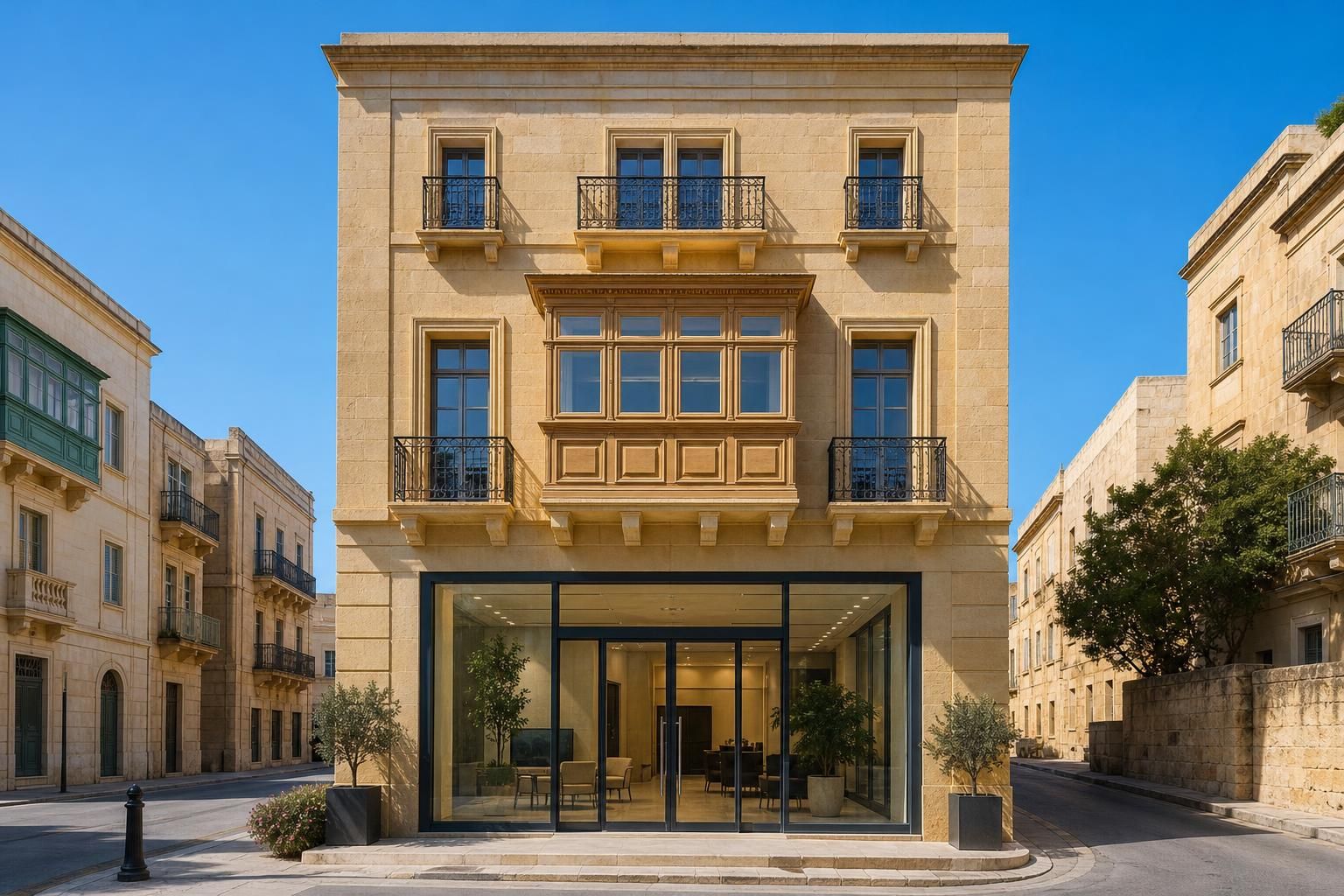
When you tour offices in Malta, the floor level often decides a viewing before the rent is even discussed. Some businesses want a glass fronted entrance that clients can walk straight into. Others prefer the calm, light and views of an upper floor. Neither is universally better, so it helps to compare them on the factors that actually affect daily operations.
If you are comparing both types at once, a broad listing of offices for rent in Malta lets you filter by area and size before you decide which level suits your team.
Ground Floor Offices: Strengths
A street level office offers immediate visibility. Passing foot traffic, signage and a welcoming entrance can be real assets for businesses that rely on walk in clients, such as accountants, clinics, estate agents or design studios.
- Easy access: no stairs or lifts, which suits visitors with mobility needs and anyone carrying equipment.
- Deliveries: simpler loading and unloading for stock, samples or furniture.
- Brand presence: shop style windows and signage that upper floors cannot match.
- Cooler interiors: ground levels in thick limestone buildings often stay cooler in summer.
Ground Floor Offices: Trade Offs
Street level also brings drawbacks. Noise from traffic, passing pedestrians and nearby cafes can intrude on calls and concentration. Privacy is lower when passers by can see in, and security needs more attention because the entrance and windows are directly accessible.
Rent can also be higher for prominent ground floor units, because the visibility itself carries a premium. Damp can be an issue in some older buildings, so ask about waterproofing and ventilation.
Upper Floor Offices: Strengths
Higher levels tend to be quieter and more private. Natural light is often better, and views over rooftops or the sea can lift the mood of a team spending long days in the same space.
- Quiet working conditions: less street noise and fewer distractions.
- Privacy: clients and staff are not exposed to passers by.
- Natural light: more daylight and better airflow in many buildings.
- Value: upper floors without street frontage can be more affordable per square metre.
Upper Floor Offices: Trade Offs
The main concern is access. Older Maltese buildings do not always have lifts, and several flights of stairs can be a problem for visitors and for moving furniture. Upper floors can also trap heat in summer, especially with large, unshaded windows, which affects cooling costs.
Visibility is limited, so you will rely more on online presence, clear directions and good signage at the entrance to help clients find you.
Comparing the Two Side by Side
A simple scoring approach works well. Rate each factor from one to five for your business, then compare the totals for each unit you view.
- Client footfall: do you depend on walk ins?
- Noise tolerance: do you take many calls or need focus?
- Accessibility: do visitors or staff need step free access?
- Security: are you storing valuable equipment or documents?
- Running costs: how will cooling and electricity compare?
- Budget: what is the rent difference for similar sizes?
Which Business Types Suit Which Level
Client facing, appointment light businesses often gain the most from ground floor premises. Teams that value concentration, such as software developers, consultants and finance professionals, usually prefer upper floors. Mixed teams sometimes split the difference by choosing a first floor unit with a lift and a clearly signed street entrance.
Whichever route you lean toward, it is worth reviewing a curated source of business premises in Malta so you can compare similar sized units on different floors rather than judging each viewing in isolation.
Questions to Ask on a Viewing
Visit at different times if you can. A quiet morning viewing may hide the noise of a busy lunchtime street. Ask whether the building has a lift and whether it is large enough for furniture. Find out how the air conditioning is installed, who maintains it and how summer bills have looked. Check the entrance security, intercom and any shared access arrangements with neighbours.
Making the Decision
The right level is the one that fits how your business actually operates, not the one that looks best on a first tour. Weigh visibility against quiet, access against privacy and rent against running costs. A short checklist, a second viewing at a different time of day and a clear look at the lease terms will usually make the answer obvious. Choose the floor that supports your clients and your team, and the office will earn its rent every month.